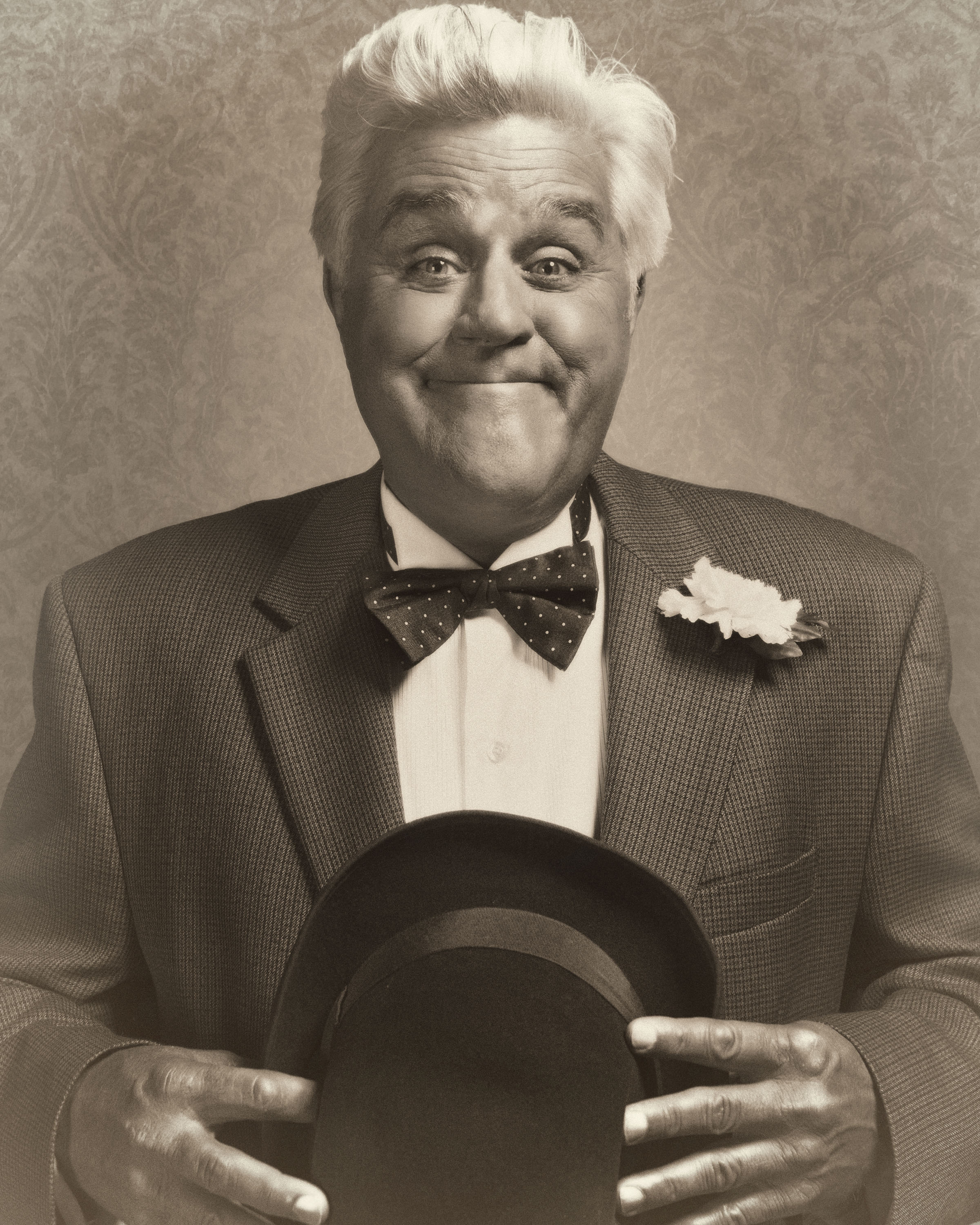
A few months ago, a friend wrote me in an e-mail in which she expressed her bafflement and incredulity as to how and why certain people had become “famous.” As a case in point, she stated that she could not discern the existence of any evidence to suggest that Jay Leno is or has ever been “funny.” This was my reply:
When Johnny Carson was in New York, ‘The Tonight Show’ was 1 hour and 45 minutes long until about 1969, I think, when it went to an hour and a half. I began watching him in 1967—when we got cable (it didn’t exist in our area of Ottawa before that)—and I watched him every night for about five years, religiously. He was brilliant. He was a great stand-up comedian—he could tell a joke with the best of them—but he was amazingly comfortable and assuredly in command, as he sat behind his desk, transitioning seamlessly from the banality of playful talk-show banter with some light-weight showbiz nullity to discussing serious political social issues with the likes of Gore Vidal and William F. Buckley. Then too, there was seemingly no challenge that he would not undertake—from driving at the Indianapolis Speedway … to smashing boards with his head under the guidance of a kung fu expert … to playing the drums behind Benny Goodman. He had been doing the Tonight Show since 1962 and, as he became more and more popular and famous, Johnny, “the Prince of Late Night,” began doing what any successful person can and should do: take more and more vacations. So, he would take a week off and there would be a guest host. Very clever and very funny people would sit in his chair and immediately reveal how hard it was to do that which Johnny made look so easy. Of all the guest hosts, two stood out for me as being incredibly good: Jerry Lewis and Woody Allen. Both hosted the show for a week. My dad didn’t watch Johnny Carson in those days—though he later became a huge fan—because the show was on too late. But he stayed up for most of the nights that Woody Allen was on. One of Woody’s guests was Muhammad Ali. They got out on the floor and tossed a medicine ball back and forth—which, given the difference in their sizes, was quite hysterical.
Later, when Johnny moved the show to California in 1972 (I think), he began having all sorts of guest-hosts. Almost all of them weren’t very good. However, the first time that I saw David Letterman, I knew that he would succeed Johnny Carson as the host of ‘The Tonight Show.’ He looked like he was born to do the job and was completely at ease and at home behind that desk. Letterman got a morning show in 1981—it was, I think, an hour long and came on at 10:30. As I was bartending and getting up late, I was completely thrilled to find something so good on television at 10:30 in the morning. But I knew the terrible truth: that this was far too hip for a.m. American television. I remember watching in amazement, one morning, as Al DiMeola played guitar brilliantly … and thinking that there was no way that this was going to “play in Peoria.” The show got cancelled before the summer was out. Letterman got depressed and smoked a lot of dope for a year, but he continued to get paid—because Grant Tinker, who was the head of NBC, believed in Dave’s talent. Tinker kept Letterman around on salary until the proper vehicle for his talents was developed. A year later, David Letterman got another chance, and ‘Late Night’ was born.
The first 5 years of Late Night were the best 5 years of talk show comedy in the history of American television (rivaled only by the two seasons of Fernwood Tonight). What his hero, Johnny Carson, had built, Letterman rent asunder through a process of comedic deconstruction. Every convention, cliché, phony gesture, false note, instance of transparent bullshitting, and expression of self-satisfied indulgence that had become the staple of the talk show—and, by that point, there were so many of them—Letterman and his brilliant crew of writers exposed, ridiculed, punctured, and disposed of with an irreverent affability which belied the essential hostility that underlay this comedic reckoning. This did not come out of the void. Letterman went back to Steve Allen, who had preceded Johnny Carson and Jack Paar as the host of ‘The Tonight Show’; paying homage to Allen’s nonsensical and maniacal glee by stealing or riffing on many of his most inspired bits and silly stunts. Letterman in ‘a suit of Velcro,’ ‘a vat of Rice-Crispies’ and, my personal favourite, ‘a suit of suet’ were stunts derived from Steve Allen. To his credit, Dave gave credit where credit was due. Letterman’s truly original contribution to the late night fare was his brilliant, ongoing remote segments (made possible by the development of light-weight portable cameras). Though his partner, Merrill Markoe, was the creative mind directing many of those wonderful segments, it seems to me that it was a joint effort and that they both understood what a perfect vehicle remote reports were for Dave’s most engagingly irreverent displays of extemporaneous wit, as channeled through transparent filters of bemused perplexity, pesky nosiness, quizzical disbelief, and feigned innocence and/or know-nothingness.
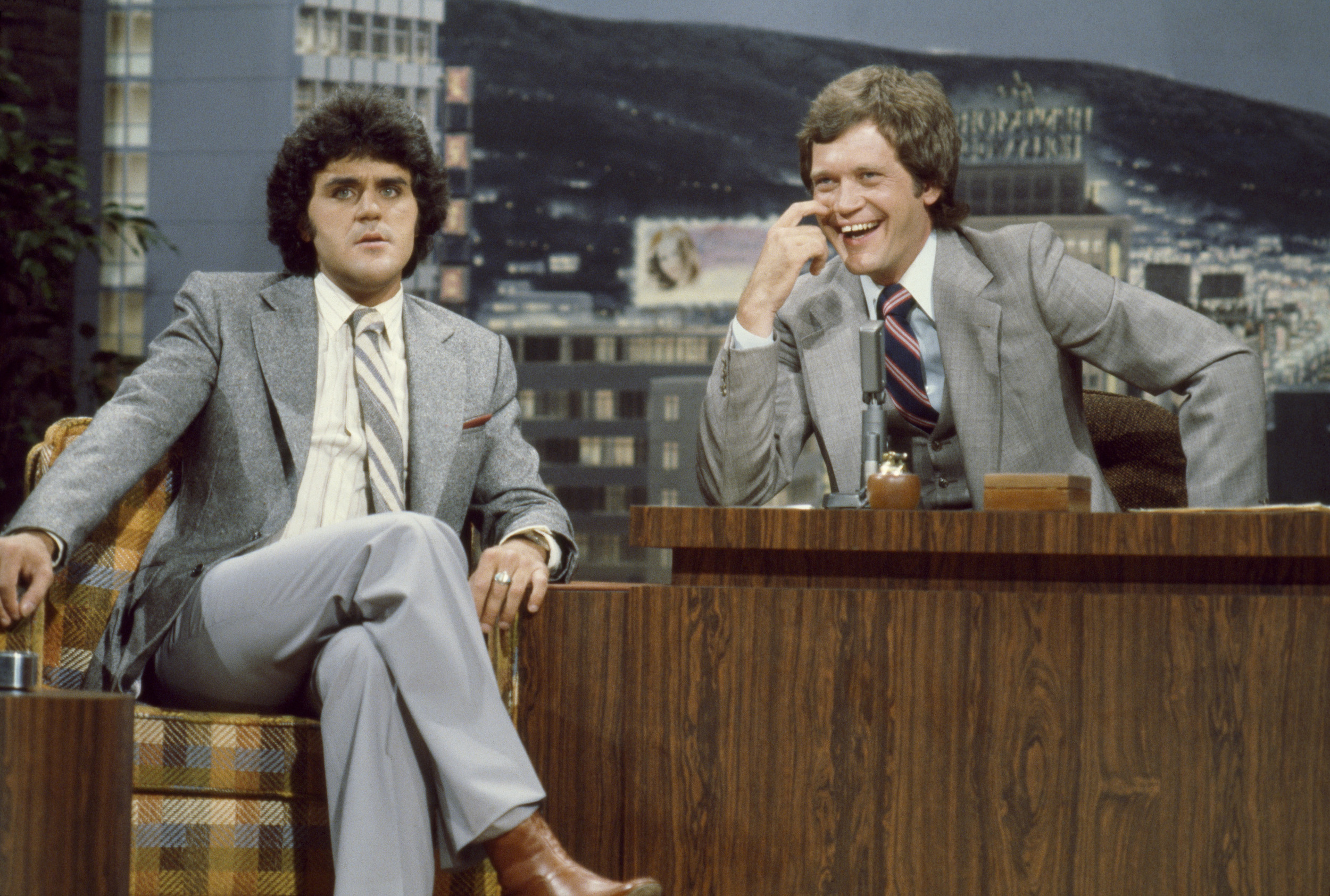
In addition to deconstructing the interview and interaction with the guests—he never kissed any of the women and always addressed the men by calling them “sir,” (as if the interview was but an overture before getting down to serious talk about mutual funds)—Letterman chose his guests carefully in those days. Like Jack Paar, he began to assemble a cast of irregulars who, by virtue of their idiosyncrasies and obvious limitations, became perfect foils for Dave and made for much better interviews than those with the much more famous and accomplished. As for the latter, Letterman was never as mean as some would later maintain—but if a celebrity owned a restaurant, for example, he would produce the menu and quiz the owner to see if he or she had any idea as to what was being sold, under his or her name, and at what cost. But, oh yes, the irregulars consisted of the likes of: the hopelessly inept and stolidly amateurish Larry “Bud” Melman (whom Letterman would come to refer to as “the gifted young actor Calvert DeForest” [Larry’s real name]); the utterly strange, yet compelling “Brother Theodore,” who dressed entirely in black, presented himself as some sort of defrocked priest cum superannuated sideshow refugee, and displayed an emotional gamut which ranged from palpable existential despair to what threatened to be outbursts of Teutonic rage (Letterman consistently referred to him as “Ted,” which, to this day, makes me chuckle); Terri Garr, whose confusion and perplexity regarding her role as a guest was exceed only by her flakey embrace of its incomprehensibility; Andy Kauffman, whose every appearance could only properly be described as “an event” of untold proportions, unexpected dimensions, and ineffable substance; and Jay Leno, Letterman’s pal and comedy-club-alumnus, whose comedic sensibilities allowed him to play a version of himself, as the Late Night “guest,” which was pitch perfect for the proceedings. Trading on his understood familiarity, Leno would come on—feigning an earnestness and seriousness of purpose that would befit an overwhelmed emergency room physician conducting triage—assume his seat next to Letterman, and get down to the business at hand of being interviewed in order to entertain America. Leno was fabulous. From the moment he appeared, Letterman would be in stitches—largely because of Leno’s faux earnestness and can-do-attitude and, of course, because he recognized everything that his friend had been doing in the clubs for years in order to prepare for this moment. For Letterman, it was like a paid vacation. He just sat back and lobbed Leno the soft-tosses and Leno did what he was going to do—which was to be unrelentingly funnny for 7 or 8 minutes. As such, he consistently and unfailingly knocked everything over the scoreboard deep into the night. As the audience soon learned, there were two stock bits that Leno would inevitably turn to: the reading of his favourite periodical, the TV Guide (a ready and reliable source of inspiration and disbelief) and his reply to Letterman’s innocent question: “So, Jay, what’s bugging you?” The latter would prompt Leno into overdrive—”What’s bugging me? What’s got me steamed? What’s my beef?—which would invariably lead to a mini-rant about something of no consequence. Nevertheless, Jay would deftly transform his disquisition on the object of his displeasure into a matter of high comedic importance and, thereby, reaped the big payoff.
When Johnny Carson announced that he was packing it in after 30 years, I assumed that Letterman, who had paid his dues and was waiting in the NBC wings, would get the gig. I had seen Jay Leno guest-host ‘The Tonight Show’ and concluded that he wasn’t very good at it. He always made me so uncomfortable; everything about his presence was wrong for the job. The idea—that he would succeed Johnny—seemed preposterous. Therefore, when Leno and his manager finagled NBC into stepping over Letterman to reward him with the position as Carson’s successor, I was dumbfounded. I knew that it was a mistake of monumental proportions—so much so, that I questioned the competency, if not the sanity of the people who had made the decision. Of course, Letterman was furious—and rightfully so. Nevertheless, he continued to dominate Leno in the ratings until, after having shamelessly ripped off the Late Show on an ongoing basis, Leno had the good fortune to book Hugh Grant after his infamous prostitution bust. And that was that. But it didn’t make Leno funny or a good host. He’s been on the air for 20 years and I’ll bet I haven’t watched more than 5 minutes of his programme at any one time or even a full hour cumulatively. He’s terrible. He still makes me uncomfortable, fawning over the guests and touching them like they were a stray dog that knew better than to get close to him. Letterman continues to be clever and, at times, inspired, but his show lost its soul when it moved to 11:30. Someone, who was as stupid as the people who chose Leno to succeed Carson, convinced Letterman to dial it back in order to appeal to more people in the more traditional time slot. Big mistake. Dave’s still had more than his share of very creative and entertaining moments, but I often wonder what he would have done with ‘The Tonight Show.’ I don’t think he would have lost his nerve, if he had finally been given what he thought he was owed.
It’s been said of Leno that he desperately wants to be liked and regarded as a good guy. If you want to understand Letterman and what makes him tick, consider the fact that, in the three weeks after he learned that he was not going to take over ‘The Tonight Show’ and was beginning to plan his exit from NBC, Dave did his best shows in five years. He was angry and it gave him his edge back; he was on top of everything and everyone and he was not in the mood to be merciful. I thought he was incredibly brilliant in that period—because he had been shocked into remembering how deeply he really cared about what he was doing.
So, ya, at one time, I would say that Jay Leno was very funny—but he hasn’t been for twenty years.
 James A. Moffatt