A Few Words About Jonathan Cott

“Jonathan Cott could drive the tour bus in the City of God. Knowledge esoteric and exoteric oozes out of his every pore,” Tom Robbins enthused in a review of Forever Young—a 1977 collection of eight Cott interview/profiles. “It’s Cott’s own amazing mind, interacting with his subjects,” Robbins declared, “that makes Forever Young such an appetizing platter.”

Jonathan Cott

Indeed, that book—which included brilliant profiles of and conversations with figures as diverse as Maurice Sendak, Glenn Gould, Henry Miller, Oriana Fallaci, and Werner Herzog—attested to the fact that Jonathan Cott had managed, as Larry McMurtry said, “to construct something like a new form, the essay-interview.”

Cott’s signature style—a conjoining of his dazzlingly eclectic knowledge with his wonderfully unaffected, child-like curiosity—informed his superb introductions and charged his interviews with an air of discovery and anticipation which produced exchanges that were deeply insightful and, often, unexpectedly revealing and rewarding.

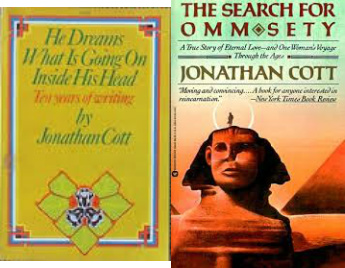
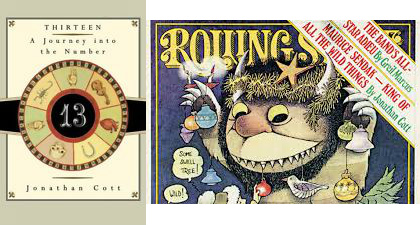
Cott's works

The interview/profiles that comprised Forever Yong were originally published in Rolling Stone magazine. As an original contributing editor, Cott’s interviews and writings regularly graced the pages of RS from its inception in 1967 throughout the 1970s. His work as the magazine’s first “European correspondent”—while he was studying children’s literature in England—provided him with an opportunity to interview such rock luminaries as John Lennon and Yoko Ono, Mick Jagger, Ray Davies, and Van Morrison.

However, rock music was but one of many subjects that Cott addressed in the pages of RS. His catholicity of musical passions and interests was reflected in his conversations with and commentaries on the works of musicians as varied as Igor Stravinsky, Virgil Fox, and Michael Tilson Thomas. Further, Cott’s eclectic body of work—which included examinations of and expositions on film, literature, poetry, parapsychology, theatre, mythology, science, and children’s literature—was consistently distinguished by his compelling intelligence, insight, and enthusiasm for the subject(s) at hand.

Cott's works

In 1977, I wrote Jonathan Cott a fan letter in order to salute his consistently outstanding contributions to RS and, specifically, his wonderful interview—“Reflections Of A Cosmic Tourist”—with Henry Miller. Much to my surprise and delight, Jonathan replied. Moreover, he was extremely generous in making complimentary remarks about my writing.

After we had exchanged a second round of letters, I set about going through my substantial collection of back issues of RS and, in reviewing Jonathan’s work, I came to understand that we shared an intriguing commonality of interests: everything from baseball, the Beatles, and Bob Dylan …to parapsychology and film … to seeking after truth and waking up! After immersing myself in Cott’s work, I decided that I wanted to write Jonathan a real letter … a man-sized letter … a letter of honest proportions.

Cott's works

During that period, I had begun to take on the rather formidable, but irresistible task of writing an autobiographical book about my study of G.I. Gurdjieff and The Fourth Way. As I delved into Jonathan Cott’s work, I began to think about a statement I had recently come across from a writer—I believe it was John Fowles—to the effect that ‘every writer has an ideal reader.’ In contemplating my proposed writing projects, I realized that Jonathan Cott was my ideal reader.

Thus, I set about writing my book as “An Open Letter To Jonathan Cott.” And with that decision, I began a very strange and improbable journey of some twenty years—marked by incomprehensible futility and frustration—before finally completing my book, entitled But I’ll Know My Song Well …. The dedication read: “For Jonathan Cott: ‘May you stay forever young.’”

In some strange sense, Jonathan Cott was with me throughout my long, strange trip. He was not lost, so much as displaced in my scheming and dreaming.

An excerpt from Jonathan Cott’s first reply to me, June 13, 1977:

Dear Jim:
Thanks for your letter—I’m expecting to find a novel by you—or perhaps a memoir, travel book, book of poems, whatever. Your writing is the best thing I’ve seen in a long time …. Again, thanks for your words, and I hope we meet up one day.
Jonathan

Cott's works

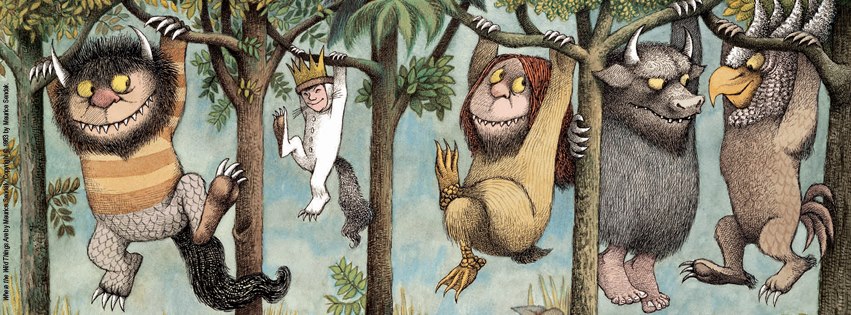
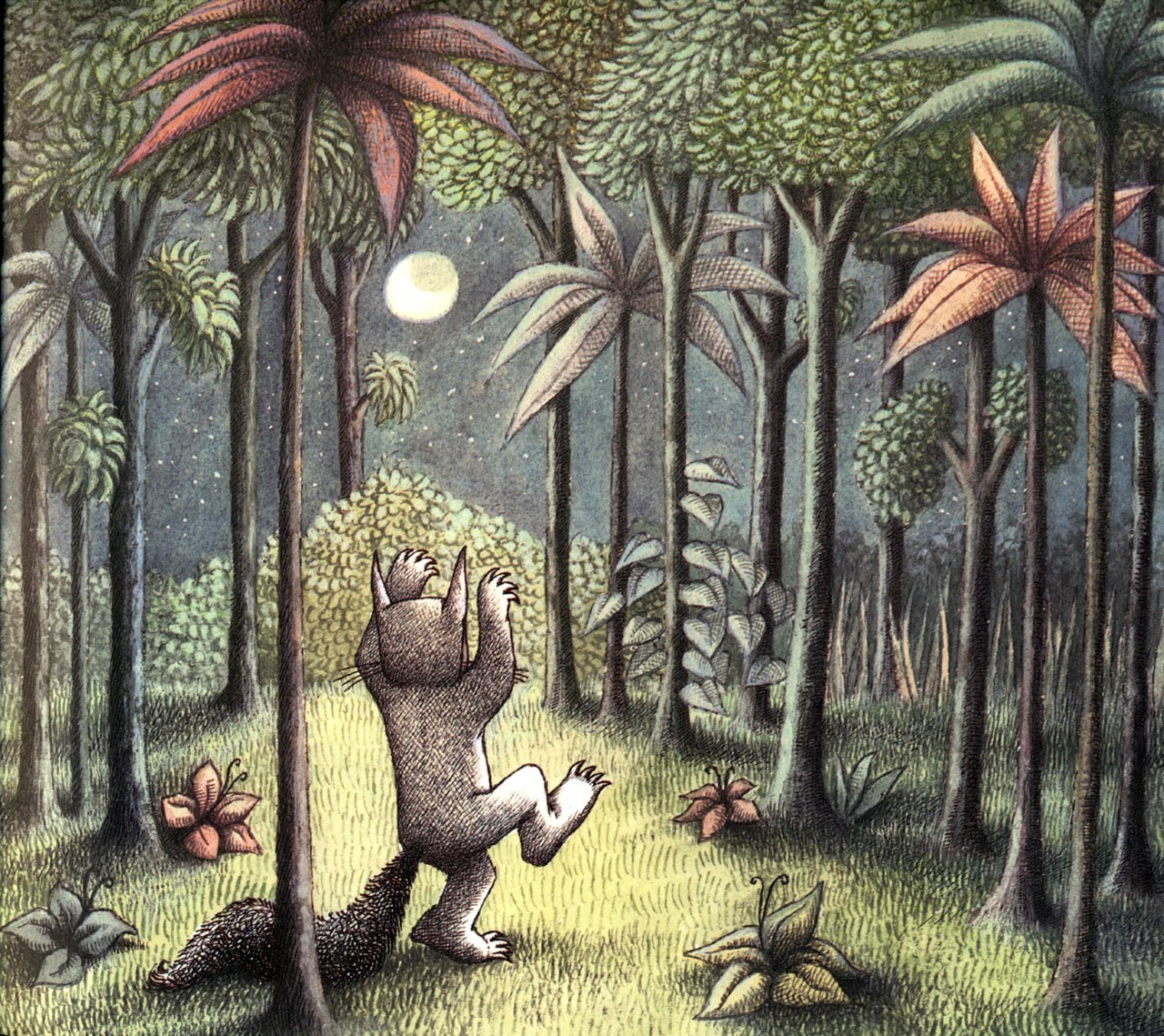
King of the Wild Things

Jonathan Cott, a journalist and writer, regularly contributed interview/profiles to Rolling Stone magazine throughout the 1970s.  For the past 38 years, Jonathan and I have been corresponding.

He spoke with Maurice Sendak in 1977, and when Sendak died in May 2012, I wrote to Jonathan.

 Dear Jonathan:

I see that Mr. Sendak has died.  I remember reading “Where The Wild Things Are” to my nephew, Peter, nearly 40 years ago and him asking me to read it to him over and over again.

Of all your work, your interview with Maurice Sendak was one of my favourite pieces.  I read it on the Number 6 bus as it crawled through traffic in downtown Ottawa during a snowstorm.  Enchanted by your exchange with Sendak, I got off the bus and, neath a street lamp, I stood doing a little Bing Crosby and catching snowflakes on my tongue, until a little man driving a very large snow plow nearly ran over me.

Jim

Jonathan’s reply contained a wonderful memory of Maurice Sendak and one of his fans:

Dear Jim

Maurice would have loved your story about the snowflakes — and I’m extremely happy that you avoided that snow plow. Very sad about Maurice’s passing since I got to know him very well over the years both socially and professionally.

I think you’ll get a kick out of something Sendak once said (especially since it concerns your namesake):

“Once a little boy sent me a charming card with a little drawing. I loved it. I answer all my children’s letters — sometimes very hastily — but this one I lingered over. I sent him a card and I drew a picture of a Wild Think on it. I wrote: ‘Dear Jim, I loved your card.’ Then I got a letter back from his mother, and she said, ‘Jim loved your card so much he ate it.’ That to me was one of the highest compliments I’ve ever received. He didn’t care that it was a original Maurice Sendak drawing or anything He saw it, he loved it, he ate it.”

Hope all’s well.

Jonathan

Post-script:  In November, last year, Jonathan wrote to inform me that he had begun working on a book about Maurice Sendak, “specifically about one of his picture books called ‘Outside Over There,’ that he considered to be his masterpiece but isn’t well known ….”

That’s Some Catch!

The following is an excerpt from my unpublished book, But I’ll Know My Song Well, in which I attempted to relate the impact of mystical teachings on my understanding of myself and the world to the transformation of meaning which, I believe, is at the heart of Joseph Heller’s brilliant novel, Catch-22.

Catch-22 is my favourite novel, and I have sometimes been accused—justifiably so—of trying to connect or relate everything, that happens to or interests me, to that book. I can’t help myself. From the first time I was introduced to Yossarian—the bombardier who lives in a world that is as absurd as it is inescapably terrifying and cruel—I felt an immediate, visceral affinity with him.

Ostensibly, his predicament is that he no longer wishes to fly combat missions—the war is as good as won—and yet he must, because Colonel Cathcart, his vainglorious commanding officer, wants to be a general and therefore keeps raising the number of missions necessary for a complete tour of duty. Yossarian’s only hope is to go crazy and be grounded by Doc Daneeka, the squadron’s medical officer. But when he asks him to do so, he finds that it isn’t that easy—there’s a catch:

There was only one catch and that was Catch-22, which specified that a concern for one’s safety in the face of dangers that were real and immediate was the process of a rational mind. Orr was crazy and could be grounded. All he had to do was ask; and as soon as he did, he would no longer be crazy and would have to fly more missions. Orr would be crazy to fly more missions and sane if he didn’t, but if he was sane he had to fly them. If he flew them he was crazy and didn’t have to; but if he didn’t want to he was sane and had to. Yossarian was moved very deeply by the absolute simplicity of this clause of Catch-22 and let out a respectful whistle.
“That’s some catch, that Catch-22,” he observed.
“It’s the best there is,” Doc Daneeka agreed.

While I had always identified with Yossarian, I came to realize—after I had more fully inhabited and absorbed the meaning of Catch-22—that my allegiance was misplaced. Yossarian is the protagonist of Catch-22, but it is his friend, Orr, who is its hero.
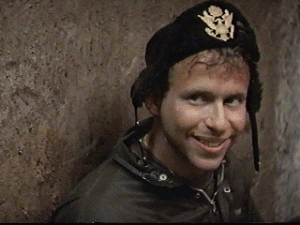
Bob Balaban as Captain Orr

Orr is an eccentric, buck-toothed, apple-cheeked, gnome-like, smutty-minded rustic, who seems oblivious to all the horror and terror of his situation: happily continuing to fly missions, even though he draws flak like a magnet and, therefore, is shot down with improbable regularity. Orr is both immensely practical and implausibly innocent. His diligent and indefatigable tinkering has made the tent, which he shares with Yossarian, the envy of the squadron.

Yossarian cannot help but be impressed and thankful, but he is driven to thoughts of homicide whenever Orr begins one of the impossibly tedious and exacting tasks—such as fixing the valve on the stove he is installing in their tent—which he performs regularly with agonizing precision and interminable patience, as much, Yossarian believes, to torment him as to make the ostensible repairs. Orr’s devotion to every detail, no matter how small, and his alacrity in persevering, against all odds, without expressing doubt or complaint, is so thoroughly foreign to Yossarian that it fills him with nausea and dread.

On the other hand, Yossarian reacts to Orr’s naïveté with fear and an ardent desire to protect him. He is all too familiar with the host of unscrupulous agents and malicious forces that will undoubtedly set upon and cheat, rob, deceive, screw, and in every way possible, victimize such an obvious and inviting mark. But Yossarian, who is closer to Orr than anyone else, underestimates him. He knows him, but he does not understand him—for Orr has a secret, which is as invisible to everyone as Snowden’s was to Yossarian. And it is every bit as shocking.

“Why don’t you ever fly with me?” Orr asks Yossarian, knowing full well that Yossarian has gone to his superiors and asked specifically to not be assigned to Orr’s flight crew. “You really ought to fly with me, you know. I’m a pretty good pilot, and I’d take good care of you,” Orr assures Yossarian. “I may get knocked down a lot, but … nobody’s ever been hurt in my plane.”
“Are you trying to tell me something?” Yossarian asks suspiciously.
“I’m trying to tell you why that big girl with the shoe was hitting me on the head that day,” Orr replies, changing the subject to an oft-discussed incident, which had occurred in the brothel that they frequent in Rome.

There, in the hallway outside of his room, an astonished audience of his friends and their whores had witnessed the bizarre spectacle of Orr laughing uncontrollably as his whore beat him repeatedly over the head with her shoe, until an especially savage blow finally rendered him unconscious. It is an event that no one can understand or explain and which Yossarian can never forget, because Orr keeps bringing it up: teasing him, by offering to explain what had occurred, only to pull back from any disclosure once Yossarian has admitted how desperately curious he is to know the meaning of what was happening.

What was happening was that Orr was neither the innocent nor the dolt that everyone assumed he must be. Orr had decided to escape. Like Yossarian, he was no longer willing to fly combat missions, but unlike Yossarian, he understood that it would be useless to protest or appeal to the reason or good will of the authorities who had placed him in this intolerable situation. His opposition would only evoke a reaction in kind—a conflict which he could not win. Orr realizes that his only hope lies in adopting a new way of thinking: one which is organized around and applicable to the idea of escaping. And so, from the moment he makes that decision, everything he does is undertaken with that aim in mind. He begins to practise being shot down. To the amazement of those who end up in the sea with him, after having to ditch, he follows the survival procedures—which everyone knows are a bad joke—as if his life depends upon them. Thus, while waiting to be rescued, he gets everyone into the yellow rubber raft provided, and assumes the posture and responsibilities of the captain of a ship with an earnestness that convinces all those present that he is a hopeless idiot. He sets about surviving by examining and availing himself of all resources: distributing soggy chocolate bars, finding bouillon cubes and making soup, serving tea, releasing marker dye and shark repellent, setting out fishing line to catch cod (because it can be eaten raw), attempting to row with the pathetic little blue oar that some twisted functionary has been perverse enough to provide, and spreading out the waterproof map and compass on his knees—all the while grinning crazily and reassuring himself, by giggling goofily, that everything will be all right.

Of course, Orr doesn’t tell anyone that he doesn’t want to fly any more missions. Quite the contrary, he continues to fly in order to practise crash-landing and ditching in the sea. Because the idea is so inconceivable, no one ever gives it any consideration. To practise being shot down. Really! It’s preposterous. If someone were to try something like that, eventually they would be killed.
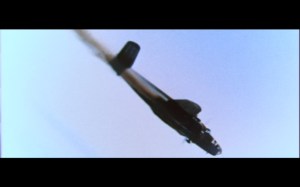
Completely sane.

Of course, everyone who flies with Orr and Yossarian is practising not being shot down, and the regularity with which their numbers dwindle promises that eventually they will all be killed—especially since Colonel Cathcart continues to raise the number of missions they must fly.

So Orr gladly continues to fly his missions, convincing everyone who knows him that he is crazy. But Orr is sane to fly more combat missions because he has faith. His mind is open to possibilities not revealed by sense-based thinking, which is the real source of and authority underlying the dilemma in which Yossarian is ensnared. He has a method of self-transformation, and as such, is no longer a slave to the terrible machinery of life in which everyone is turning.

Orr has within himself another system. By this, he finds a new relation to what he experiences. Ideas, different from those he has acquired from brute-life, have entered and awakened his mind. In his intimate conversation with himself, he talks to himself in a new way, and, as he listens, his understanding of the meaning of these ideas gradually unfolds. Consequently, he is in the world, but not of it.

Of course, no one but Orr knows this; it is an invisible fact. So when Orr is shot down and is separated from the rest of his crew—drifting away, alone on his raft, into a storm—Yossarian presumes, like everyone else, that his friend has been lost at sea.

Yossarian could never understand Orr because he takes everything about him on a superficial, literal level. He is so thoroughly attached to his perspective that, just as he can never do anything other than react to all the horror and absurdity that assaults him, he can never penetrate Orr’s meaning. He has eyes but he cannot see, he has ears but cannot hear. Orr keeps dropping hints, but cannot tell Yossarian the truth directly; he must discover its meaning for himself. Yossarian suspects that Orr is up to something, but it never dawns on him that everything Orr is doing and keeps repeating to him points to the idea that he is planning to escape. Yossarian is simply incapable of imagining how Orr has radically altered everything by changing its meaning.

Evidence Of Jay Leno Being Funny

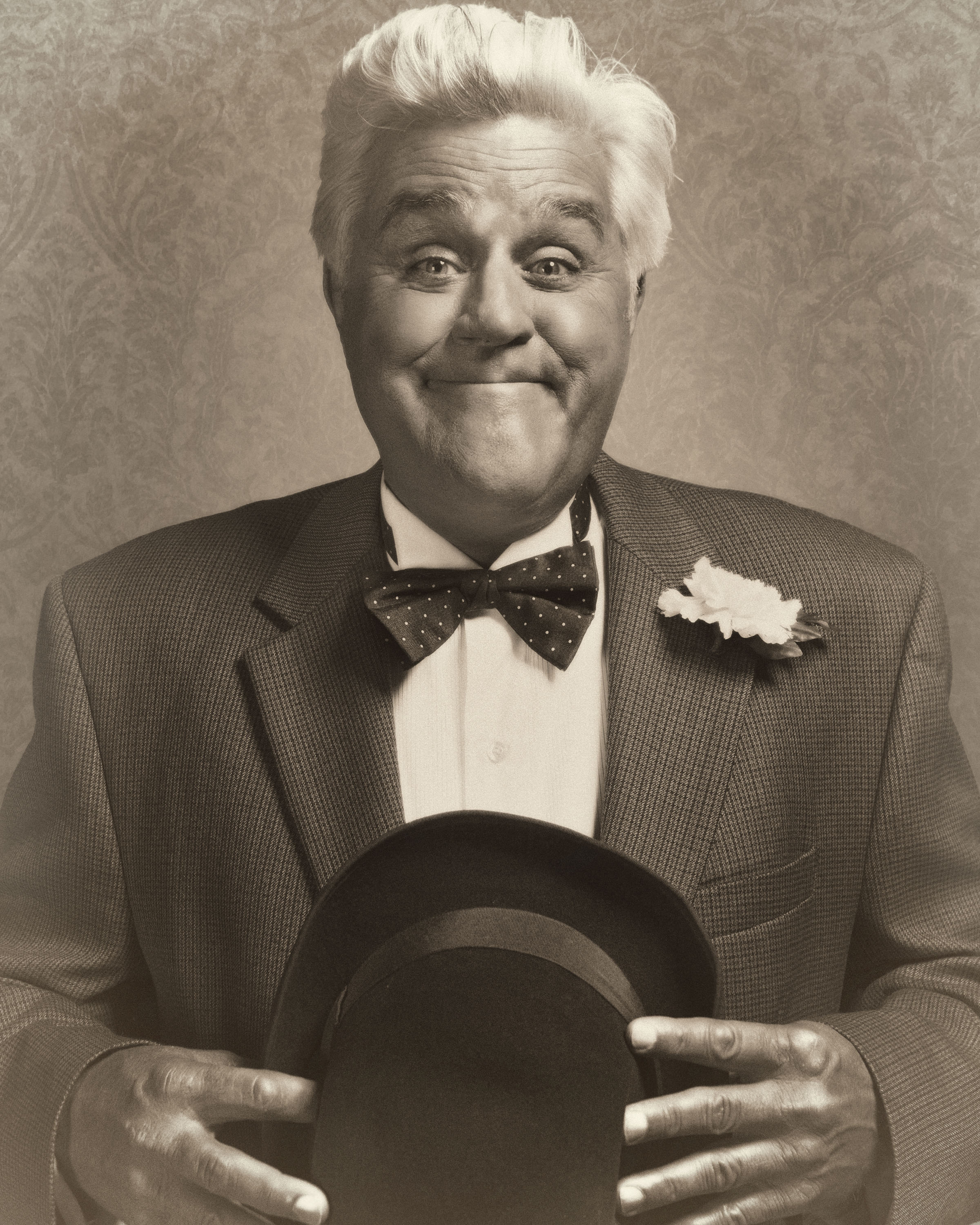
A few months ago, a friend wrote me in an e-mail in which she expressed her bafflement and incredulity as to how and why certain people had become “famous.”  As a case in point, she stated that she could not discern the existence of any evidence to suggest that Jay Leno is or has ever been “funny.”  This was my reply: 

leno

When Johnny Carson was in New York, ‘The Tonight Show’ was 1 hour and 45 minutes long until about 1969, I think, when it went to an hour and a half.  I began watching him in 1967—when we got cable (it didn’t exist in our area of Ottawa before that)—and I watched him every night for about five years, religiously.  He was brilliant.  He was a great stand-up comedian—he could tell a joke with the best of them—but he was amazingly comfortable and assuredly in command, as he sat behind his desk, transitioning seamlessly from the banality of playful talk-show banter with some light-weight showbiz nullity to discussing serious political social issues with the likes of Gore Vidal and William F. Buckley. Then too, there was seemingly no challenge that he would not undertake—from driving at the Indianapolis Speedway … to smashing boards with his head under the guidance of a kung fu expert … to playing the drums behind Benny Goodman.  He had been doing the Tonight Show since 1962 and, as he became more and more popular and famous, Johnny, “the Prince of Late Night,” began doing what any successful person can and should do:  take more and more vacations.  So, he would take a week off and there would be a guest host.  Very clever and very funny people would sit in his chair and immediately reveal how hard it was to do that which Johnny made look so easy.  Of all the guest hosts, two stood out for me as being incredibly good: Jerry Lewis and Woody Allen.  Both hosted the show for a week.  My dad didn’t watch Johnny Carson in those days—though he later became a huge fan—because the show was on too late.  But he stayed up for most of the nights that Woody Allen was on.  One of Woody’s guests was Muhammad Ali.  They got out on the floor and tossed a medicine ball back and forth—which, given the difference in their sizes, was quite hysterical.


Later, when Johnny moved the show to California in 1972 (I think), he began having all sorts of guest-hosts.  Almost all of them weren’t very good.  However, the first time that I saw David Letterman, I knew that he would succeed Johnny Carson as the host of ‘The Tonight Show.’  He looked like he was born to do the job and was completely at ease and at home behind that desk.  Letterman got a morning show in 1981—it was, I think, an hour long and came on at 10:30.  As I was bartending and getting up late, I was completely thrilled to find something so good on television at 10:30 in the morning.  But I knew the terrible truth:  that this was far too hip for a.m. American television.  I remember watching in amazement, one morning, as Al DiMeola played guitar brilliantly … and thinking that there was no way that this was going to “play in Peoria.”  The show got cancelled before the summer was out.  Letterman got depressed and smoked a lot of dope for a year, but he continued to get paid—because Grant Tinker, who was the head of NBC, believed in Dave’s talent.  Tinker kept Letterman around on salary until the proper vehicle for his talents was developed.  A year later, David Letterman got another chance, and ‘Late Night’ was born.


The first 5 years of Late Night were the best 5 years of talk show comedy in the history of American television (rivaled only by the two seasons of Fernwood Tonight). What his hero, Johnny Carson, had built, Letterman rent asunder through a process of comedic deconstruction.  Every convention, cliché, phony gesture, false note, instance of transparent bullshitting, and expression of self-satisfied indulgence that had become the staple of the talk show—and, by that point, there were so many of them—Letterman and his brilliant crew of writers exposed, ridiculed, punctured, and disposed of with an irreverent affability which belied the essential hostility that underlay this comedic reckoning.  This did not come out of the void.  Letterman went back to Steve Allen, who had preceded Johnny Carson and Jack Paar as the host of ‘The Tonight Show’; paying homage to Allen’s nonsensical and maniacal glee by stealing or riffing on many of his most inspired bits and silly stunts.  Letterman in ‘a suit of Velcro,’ ‘a vat of Rice-Crispies’ and, my personal favourite, ‘a suit of suet’ were stunts derived from Steve Allen.  To his credit, Dave gave credit where credit was due.  Letterman’s truly original contribution to the late night fare was his brilliant, ongoing remote segments (made possible by the development of light-weight portable cameras).  Though his partner, Merrill Markoe, was the creative mind directing many of those wonderful segments, it seems to me that it was a joint effort and that they both understood what a perfect vehicle remote reports were for Dave’s most engagingly irreverent displays of extemporaneous wit, as channeled through transparent filters of bemused perplexity, pesky nosiness, quizzical disbelief, and feigned innocence and/or know-nothingness.


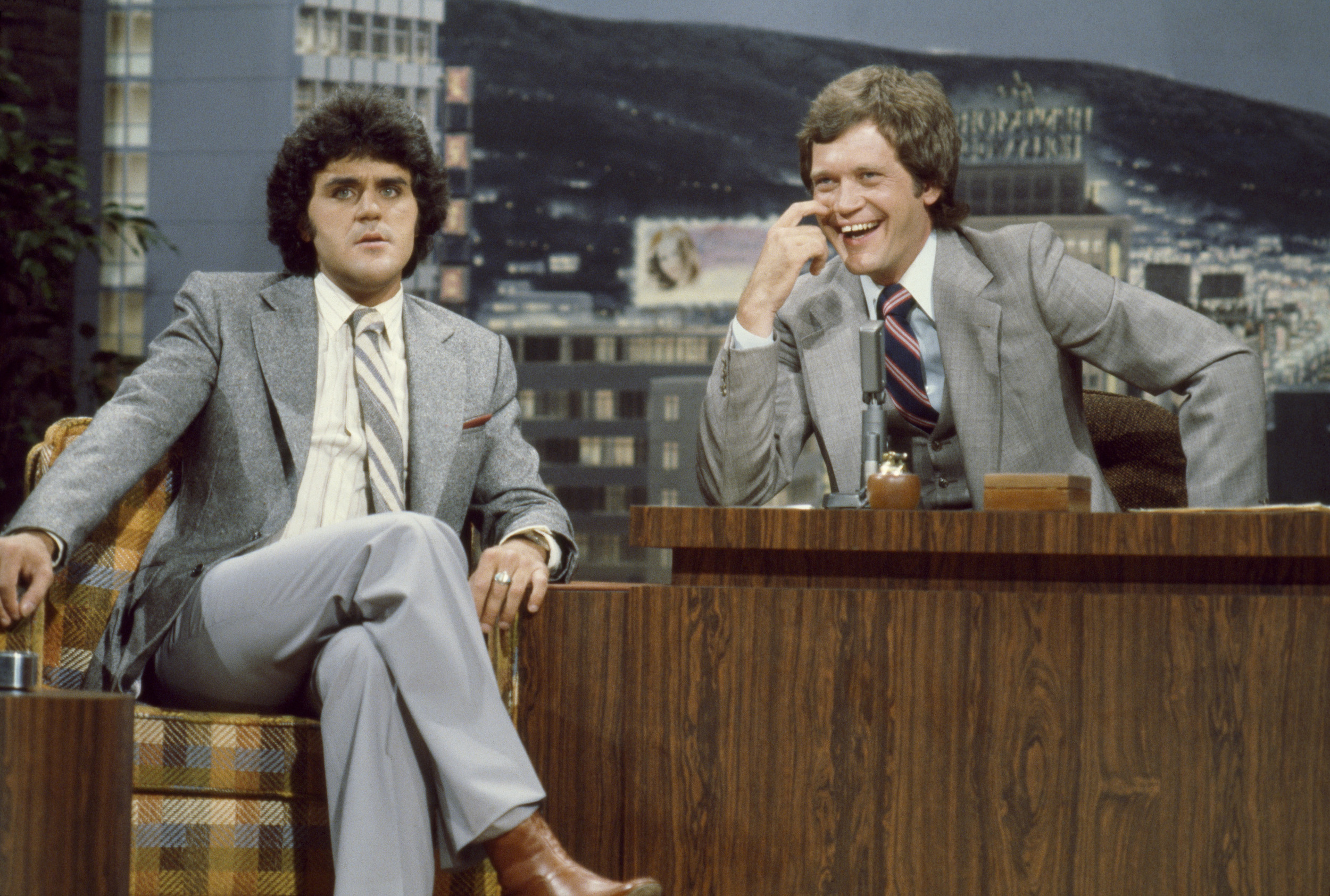
In addition to deconstructing the interview and interaction with the guests—he never kissed any of the women and always addressed the men by calling them “sir,” (as if the interview was but an overture before getting down to serious talk about mutual funds)—Letterman chose his guests carefully in those days.  Like Jack Paar, he began to assemble a cast of irregulars who, by virtue of their idiosyncrasies and obvious limitations, became perfect foils for Dave and made for much better interviews than those with the much more famous and accomplished.  As for the latter, Letterman was never as mean as some would later maintain—but if a celebrity owned a restaurant, for example, he would produce the menu and quiz the owner to see if he or she had any idea as to what was being sold, under his or her name, and at what cost.  But, oh yes, the irregulars consisted of the likes of:  the hopelessly inept and stolidly amateurish Larry “Bud” Melman (whom Letterman would come to refer to as “the gifted young actor Calvert DeForest” [Larry’s real name]); the utterly strange, yet compelling “Brother Theodore,” who dressed entirely in black, presented himself as some sort of defrocked priest cum superannuated sideshow refugee, and displayed an emotional gamut which ranged from palpable existential despair to what threatened to be outbursts of Teutonic rage (Letterman consistently referred to him as “Ted,” which, to this day, makes me chuckle); Terri Garr, whose confusion and perplexity regarding her role as a guest was exceed only by her flakey embrace of its incomprehensibility; Andy Kauffman, whose every appearance could only properly be described as “an event” of untold proportions, unexpected dimensions, and ineffable substance; and Jay Leno, Letterman’s pal and comedy-club-alumnus, whose comedic sensibilities allowed him to play a version of himself, as the Late Night “guest,” which was pitch perfect for the proceedings.  Trading on his understood familiarity, Leno would come on—feigning an earnestness and seriousness of purpose that would befit an overwhelmed emergency room physician conducting triage—assume his seat next to Letterman, and get down to the business at hand of being interviewed in order to entertain America.  Leno was fabulous.  From the moment he appeared, Letterman would be in stitches—largely because of Leno’s faux earnestness and can-do-attitude and, of course, because he recognized everything that his friend had been doing in the clubs for years in order to prepare for this moment.  For Letterman, it was like a paid vacation.  He just sat back and lobbed Leno the soft-tosses and Leno did what he was going to do—which was to be unrelentingly funnny for 7 or 8 minutes.  As such, he consistently and unfailingly knocked everything over the scoreboard deep into the night.  As the audience soon learned, there were two stock bits that Leno would inevitably turn to:  the reading of his favourite periodical, the TV Guide (a ready and reliable source of inspiration and disbelief) and his reply to Letterman’s innocent question:  “So, Jay, what’s bugging you?”  The latter would prompt Leno into overdrive—”What’s bugging meWhat’s got me steamedWhat’s my beef?—which would invariably lead to a mini-rant about something of no consequence.  Nevertheless, Jay would deftly transform his disquisition on the object of his displeasure into a matter of high comedic importance and, thereby, reaped the big payoff.


When Johnny Carson announced that he was packing it in after 30 years, I assumed that Letterman, who had paid his dues and was waiting in the NBC wings, would get the gig.  I had seen Jay Leno guest-host ‘The Tonight Show’ and concluded that he wasn’t very good at it.    He always made me so uncomfortable; everything about his presence was wrong for the job. The idea—that he would succeed Johnny—seemed preposterous.  Therefore, when Leno and his manager finagled NBC into stepping over Letterman to reward him with the position as Carson’s successor, I was dumbfounded.  I knew that it was a mistake of monumental proportions—so much so, that I questioned the competency, if not the sanity of the people who had made the decision.  Of course, Letterman was furious—and rightfully so.  Nevertheless, he continued to dominate Leno in the ratings until, after having shamelessly ripped off the Late Show on an ongoing basis, Leno had the good fortune to book Hugh Grant after his infamous prostitution bust.  And that was that.  But it didn’t make Leno funny or a good host.  He’s been on the air for 20 years and I’ll bet I haven’t watched more than 5 minutes of his programme at any one time or even a full hour cumulatively.  He’s terrible.  He still makes me uncomfortable, fawning over the guests and touching them like they were a stray dog that knew better than to get close to him.  Letterman continues to be clever and, at times, inspired, but his show lost its soul when it moved to 11:30.  Someone, who was as stupid as the people who chose Leno to succeed Carson, convinced Letterman to dial it back in order to appeal to more people in the more traditional time slot.  Big mistake.  Dave’s still had more than his share of very creative and entertaining moments, but I often wonder what he would have done with ‘The Tonight Show.’  I don’t think he would have lost his nerve, if he had finally been given what he thought he was owed.


It’s been said of Leno that he desperately wants to be liked and regarded as a good guy.  If you want to understand Letterman and what makes him tick, consider the fact that, in the three weeks after he learned that he was not going to take over ‘The Tonight Show’ and was beginning to plan his exit from NBC, Dave did his best shows in five years.  He was angry and it gave him his edge back; he was on top of everything and everyone and he was not in the mood to be merciful.  I thought he was incredibly brilliant in that period—because he had been shocked into remembering how deeply he really cared about what he was doing.


So, ya, at one time, I would say that Jay Leno was very funny—but he hasn’t been for twenty years.


leno and letterman